


Plant, structure, leaf, stem, flower, fruit, roots, epidermis, palisade mesophyll, spongy mesophyll, cuticle, xylem, phloem, vein, stoma, stomata, guard cell, turgid, flaccid, photosynthesis.

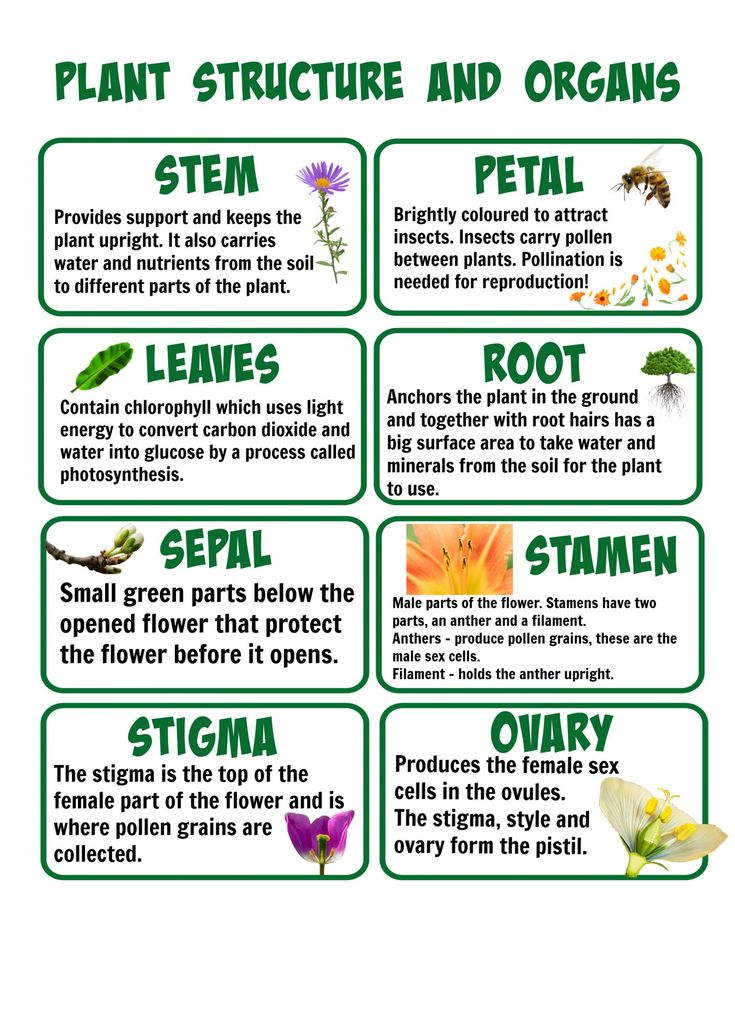
We all know what plants are, and they give us immense pleasure when they flower, or when they grow to a size we are happy with. But what are they made up of?
To summarise this, a plant has the following:
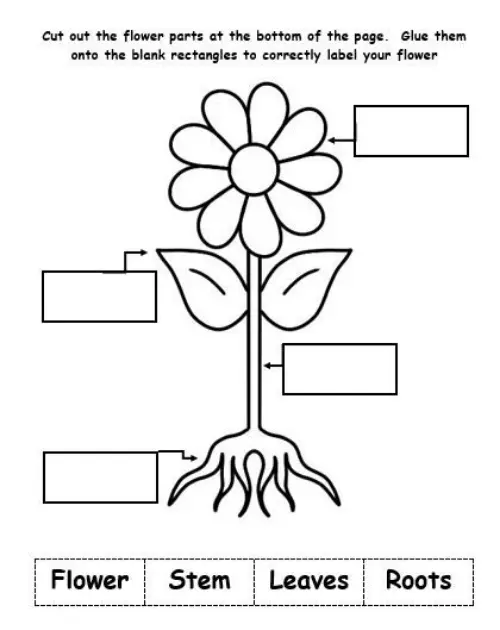
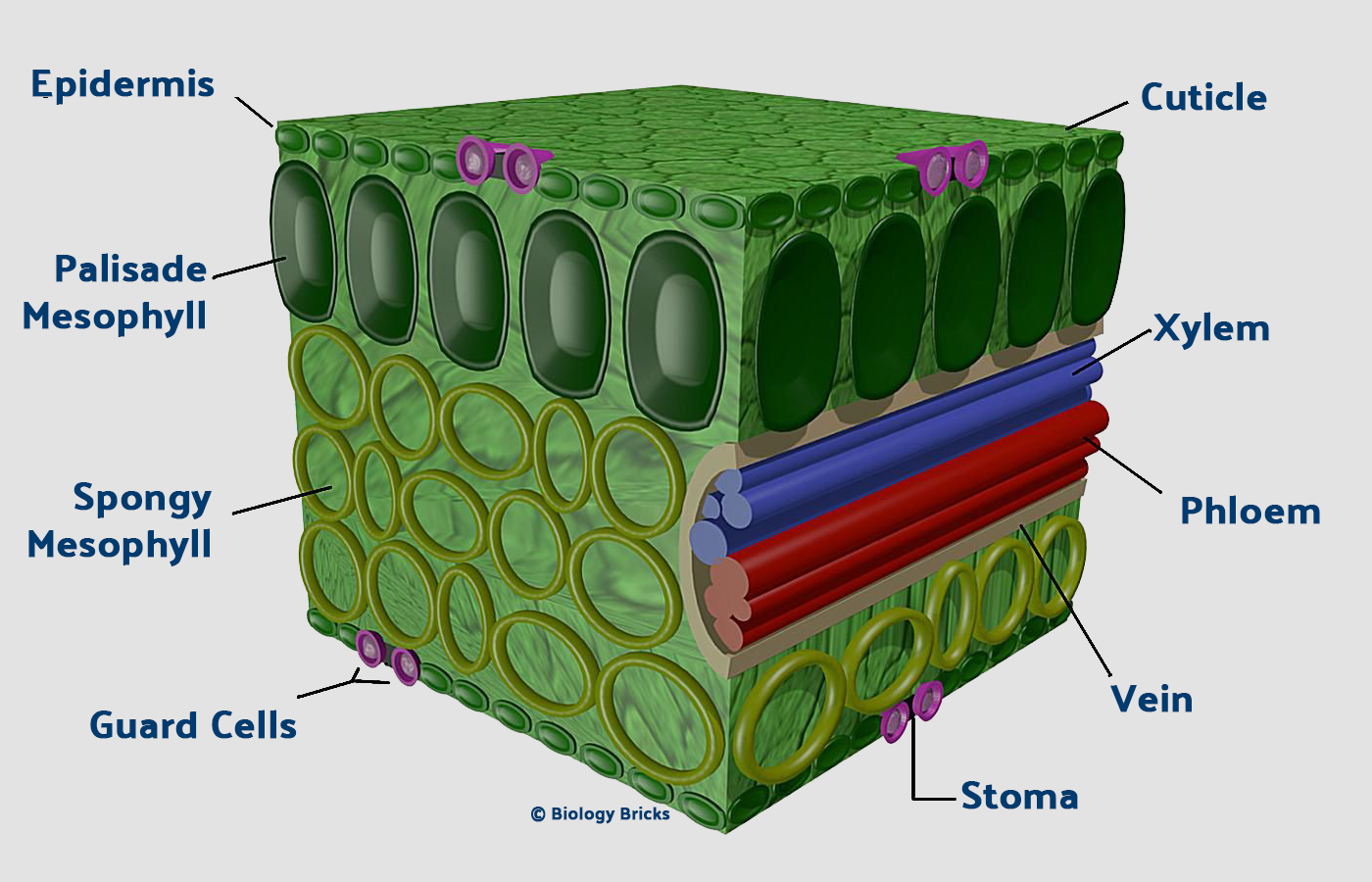
The leaves form a major part of the plant and allow for photosynthesis to occur. This can be read further in my page about photosynthesis. The leaf is also involved in the process of converting carbon dioxide into oxygen, and allowing the transport of nutrients into the other parts of the plant.
The leaf has the following parts:
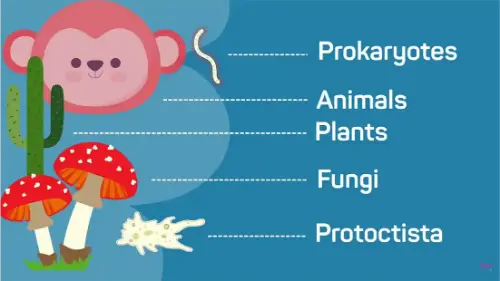
The following still is from a video on genetic modification, with the following details:
Please click on the image to view the video.

The epidermis is like our skin. In terms of function, it works in the same way as the skin on our body does, by protecting what's inside. I mean, our skin isn't green...
The mesophylls work together, and they have slightly different roles. Palisade mesophylls are regimental and lined up perfectly next to each other. They allow the absorption of light for photosynthesis to occur.
The spongy mesophylls are loosely packed to help with gas exchange. They lie on the underneath of the leaf, and work with stoma and guard cells to release oxygen into the atmosphere.
Guard cells work to allow the process of photosynthesis and enable the removal of waste product. They are situated around the stoma, which opens and closes to allow the waste product through. This is known as being Turgid (swollen), and Flaccid (shrunken).
The cuticle is a thin layer of protection for the epidermis. It is the outermost layer of the leaf and stem. It is made of a polymer that is waxy and its function is to both protect the skin, as well as stop water from evaporating from the plant. Where it protects the skin from dirt and excess water or other molecules, the cuticle layer is semi-permeable.
The xylem and phloem work in a similar fashion to each other. They both allow transport of nutrients and water, but the phloem allows this to go both up and down, whereas the xylem only allows for single way transport, from the roots up to the plant. The phloem also has a valve system, like the valves in our hearts. The xylem and phloem are considered the transportation or circulatory system of the plant.
The stomata control gas exchange in the leaf. They open and close to allow release of oxygen, and intake of carbon dioxide. They are situated on the top or bottom of the leaf, and work with the mesophylls. They are surrounded by guard cells.
The vacuole acts much like the same organelle in the human cells, by storing or removing water from the cell. A plant's vacuole also stores cell sap. So, when you see sap on a tree (for example), you will know that it has been removed by the vacuole.

A plant can be nocturnal. During the day, it will open it's stomata cells to take in gases needed for photosynthesis, whereas at night it will close these cells to preserve water ready for the next day.
The structural adaptation of a plant includes the colour of its flowers. This helps it to attract the right kind of insect to pollinate it. Or it could be, so it warns small animals off, so it doesn't get eaten. This then in turn helps with reproduction of the plant.
There are also other parts of the plant that I haven't yet mentioned. They include:
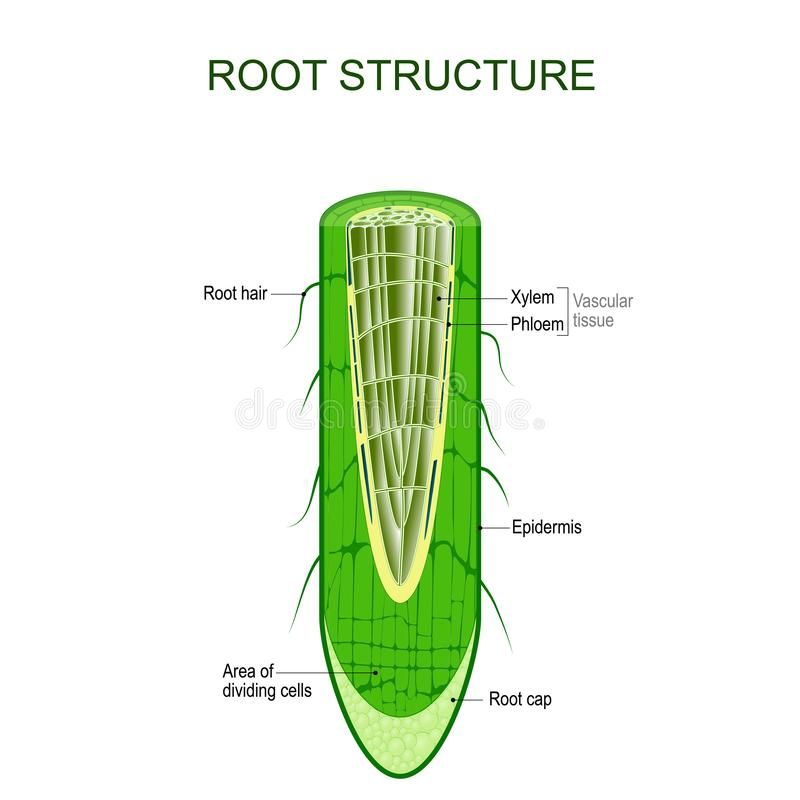
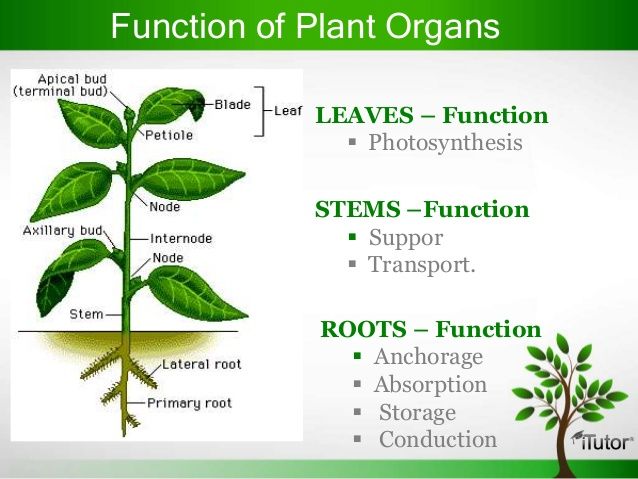
Plants are structured in a way that they will grow up and down from the baseline of the ground. We know this happens using tropisms. But this is also separated by two distinct organ systems in the plant.
Above ground, the shoot system is present. This is where the photosynthesis happens, and general growth for reproduction. It is also the part of the plant you usually see when looking out the window.
Below ground, the root system is in charge. This is the part of the plant that looks for food: nutrients in the soil, water and so on. There are different types of roots: tap roots grow long and deep into the ground, shallow roots are just below the surface, and general rooting systems that are in the middle.
Each organ system works with each other to help them grow, and use the xylem and phloem to move the nutrients around, along with other uses and processes.
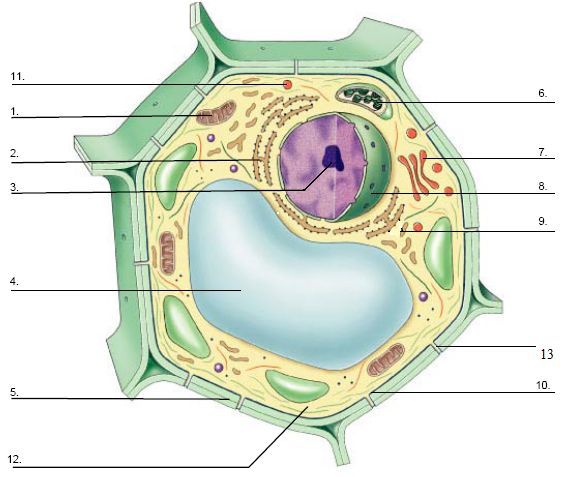
On a cellular level, plants are very similar to human or animal cells. They possess the same organelles, but also have a few differences.
Firstly, the main difference is the colour of a plant's skin. Most of the plants you see have a distinct green hue to them. There is a reason for this. Each plant cell has organelles called chloroplasts. They produce a green pigment called chlorphyll, which enables the plant to photosynthesise. It is also the main reason for that green, Hulk-like colouring you can visually see.
Secondly, each plant cell has a cell wall, as well as a membrane. Where animal cells have just the membrane, the thicker wall serves a dual purpose. It enables the plants to withstand inclement weathers while outside, and also they are thicker to help prevent invitation of diseases.
Lastly, the plant cells have a vacuole. This is an organelle that holds solutions and fluids within the cell. These fluids can be released at times of need (during dry spells, for instance) in order to feed the plant, or just to help it stand upright in order to maximise the amount of leaf pattern available during sunny periods for photosynthesis.
Plant cells are otherwise the same as a human or animal cell, and they fall within the Eukarya domain of life.
You can read more about cells in the Eukaryotic Cells page in the DNA section.

Work out the functions of parts of the plant, and if you can eat them.
Test yourself with these exam-style questions. Try not to cheat by opening the anwers first...
A leaf. The cells are the smallest, and the root hair is in between.
The phloem allows bi-directional movement of molecules as it allows the molecules to go up and down the plant to the relevant areas needed.
The vacuole, cell wall and chloroplasts are the three distinguishing organelles that do not feature in a human cell.

A root hair cell.
It has an increased surface area that enables it to absorb nutrients from the roots more effectively.
Chlorophyll from chloroplasts, which is an organelle only found in plants.
To allow it to photosynthesise, which allows it to make starch, proteins and sugars needed for the plant to stay alive.
Water and mineral ions can be transported through the xylem.


