


Active transport, transfer, substances, energy, low concentration, high concentration, concentration gradient, vesicles, nutrients, minerals, cell membrane, partially permeable.

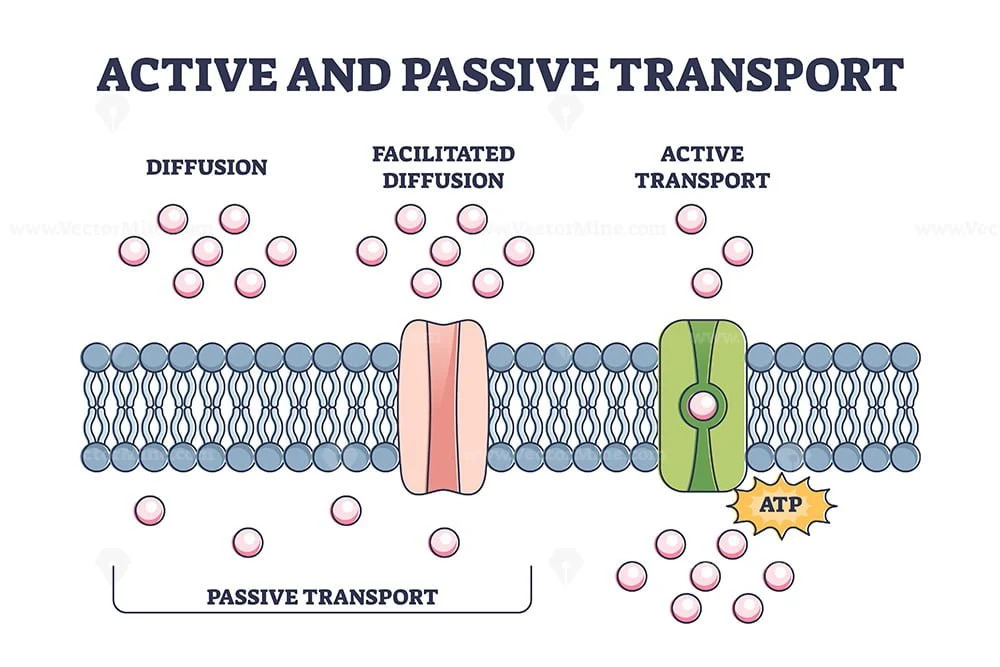
Substances can move between the inside and outside of cells. This is done through the cell membrane. Although you would think that a cell membrane just holds all the organelles inside and stops them from escaping, the cell has molecules at certain points that allow the transport of particles within the cell to the outside.
But how does it do it?
To start, inside each cell, vesicles are created. These vesicles are small packets of protein that have been processed by the golgi apparatus, and they sit ready to be used by the cell at a later point. They just kind of float around the cell waiting to be used.
Our cells have a cell membrane, also known as a plasma membrane. This membrane is semi-permeable. This means it allows certain components to travel between the cell and the external area. But it keeps other components that are larger within the cell.
There are three processes that allow for movement of vesicles and other molecules between cells and between the internal and external extremities. They are osmosis, diffusion and active transport.
Active transport happens by the movement of these vesicles and other particles within the cell to another part, outside the cell. This process moves molecules from a region of low concentration to high concentration.
This is linked to the concentration gradient. A concentration gradient is how concentrated a solute is.
Active transport is different to the other two (osmosis/diffusion) in that it requires energy in order to move molecules. Osmosis requires the membrane to be present in order for the molecule to move, but doesn't use energy. This is known as passive transport. Diffusion is similar to osmosis in this respect, but doesn't even require the membrane to work.
Some examples of active transport include:


There are two types of active transport - primary active transport being used by energy called ATP, and secondary that uses electrochemical ions
Plants also require active transport systems which are mainly involved in the transport of materials. This happens through the root hair cells underground, and transports water, minerals, and nutrients that are then delivered around the rest of the plant.
Plants use energy released during respiration to move the molecules against the grain, so to speak, of the concentration gradient.
Examples of this happening in plants includes:

The following still is from a video on transpiration and translocation, with the following details:
Please click on the image to view the video.

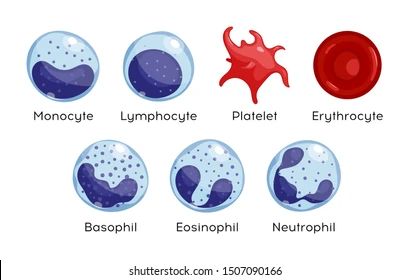
A great example of how active transport works in humans is to look at the white blood cell. What do they do? They literally eat pathogens that are in your body that shouldn't be there.
So, your white blood cell will travel around your circulatory system, seeking out the pathogens. When it gets to them, it will only allow that pathogen to enter the cell. This is through active transport. When it does this, it doesn't allow anything to escape the cell at the time, and often, the white blood cell will get slightly bigger.


